Chipstead House
Location: Sevenoaks, Kent
Property type: 1970’s detached house
Scope: Ground floor remodelling and two storey extension
Size / area: Approx. 50m² extension
Budget band: Undisclosed
Stage: Due to be completed March 2026
A thoughtful extension and retrofit using natural, sustainable materials
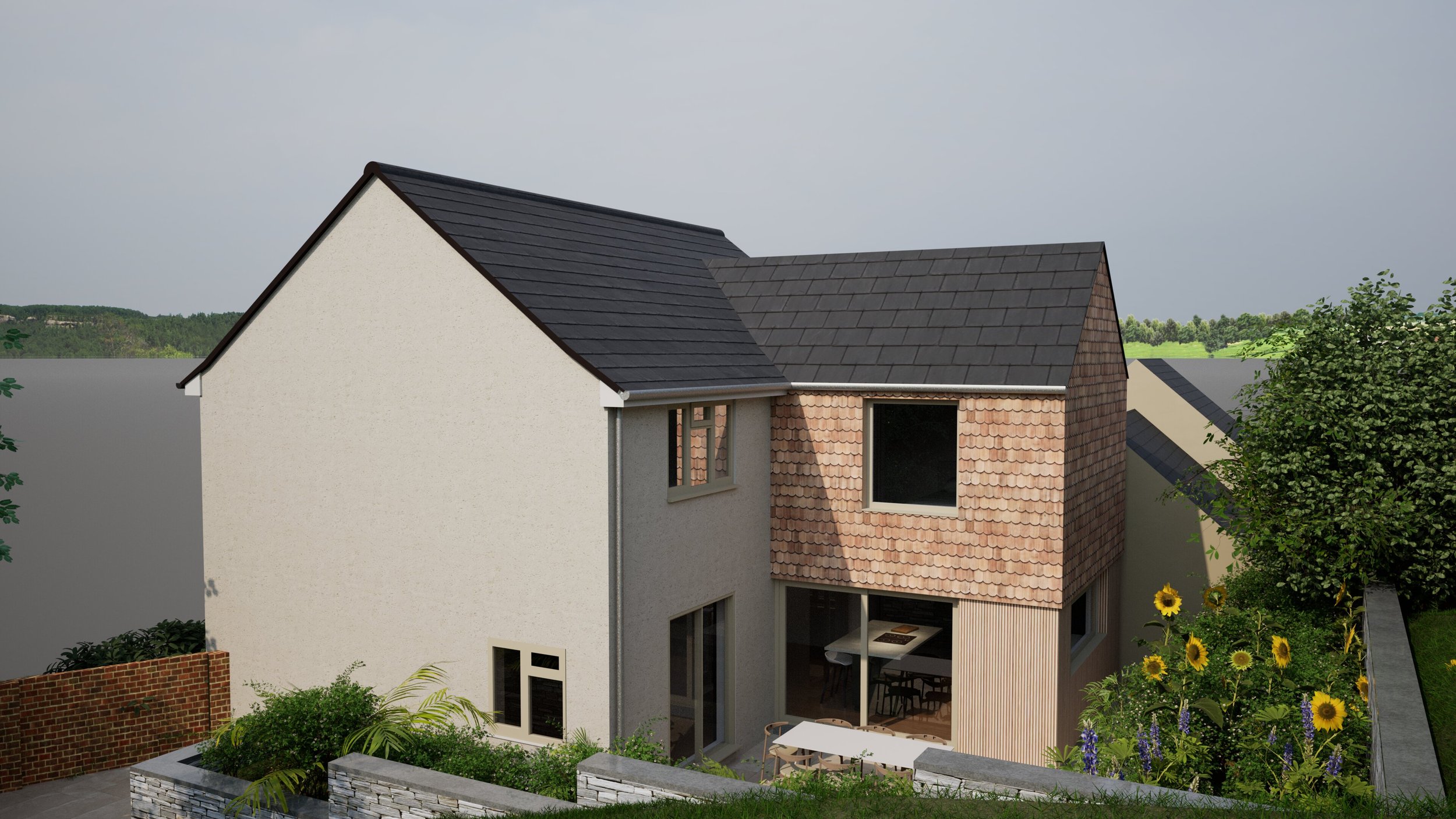
The owners of this dated 1970s detached house were keen to transform it into a sustainable, thermally efficient home. They wanted to explore natural materials and environmentally responsible construction methods as part of the retrofit. In addition, they asked us to redesign the landscaping, as the property sits on a steeply sloping garden that blocks much of the natural light and offered limited views — most of them directed into the back of the hill.
Sharpe Architecture has led the project from initial feasibility through to on-site delivery, which is currently underway. Our proposal includes a two-storey extension and a comprehensive reconfiguration of the ground floor to improve both performance and functionality. We carefully developed the construction details to ensure all components could be sustainably sourced and made from natural materials.
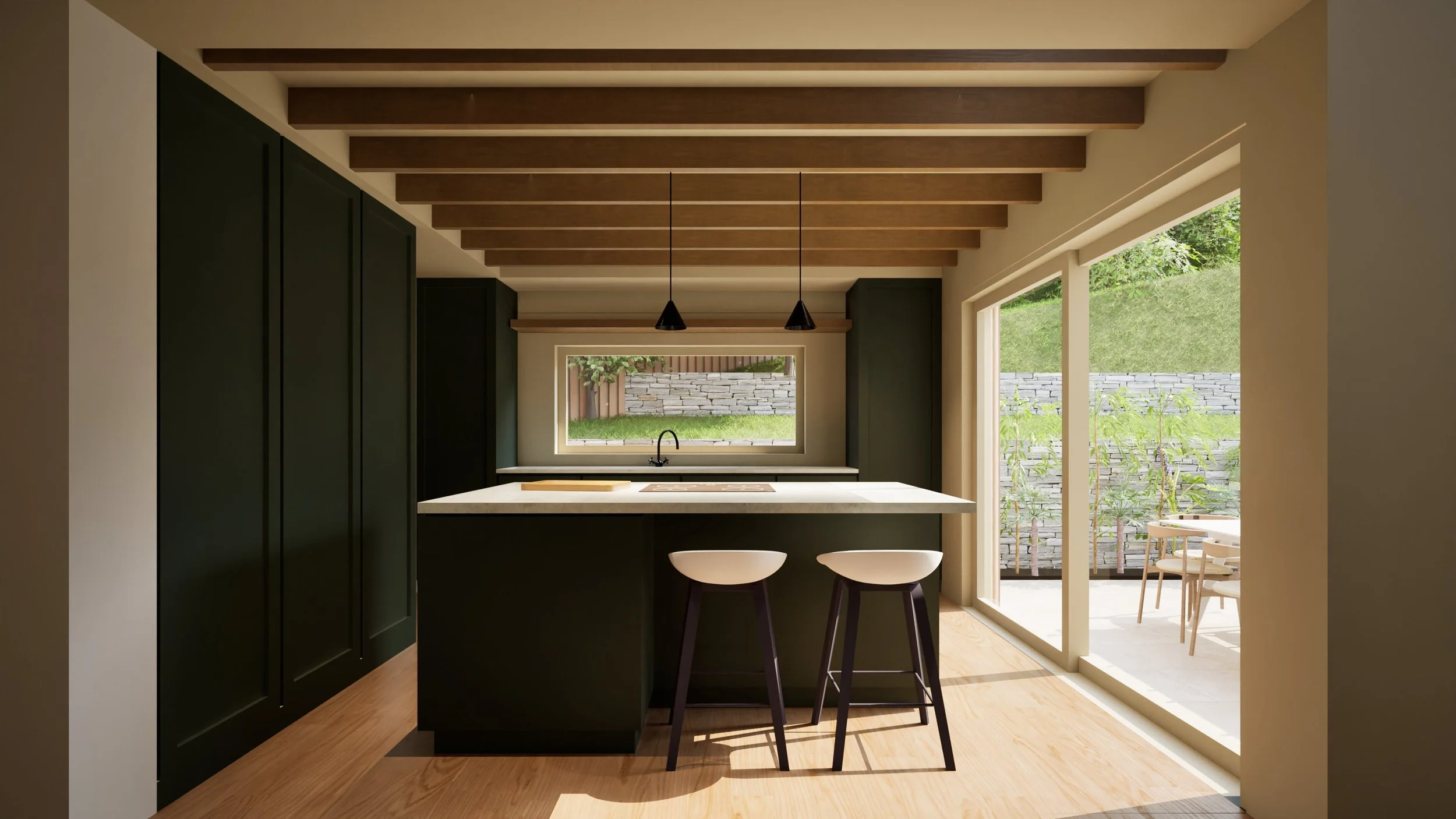
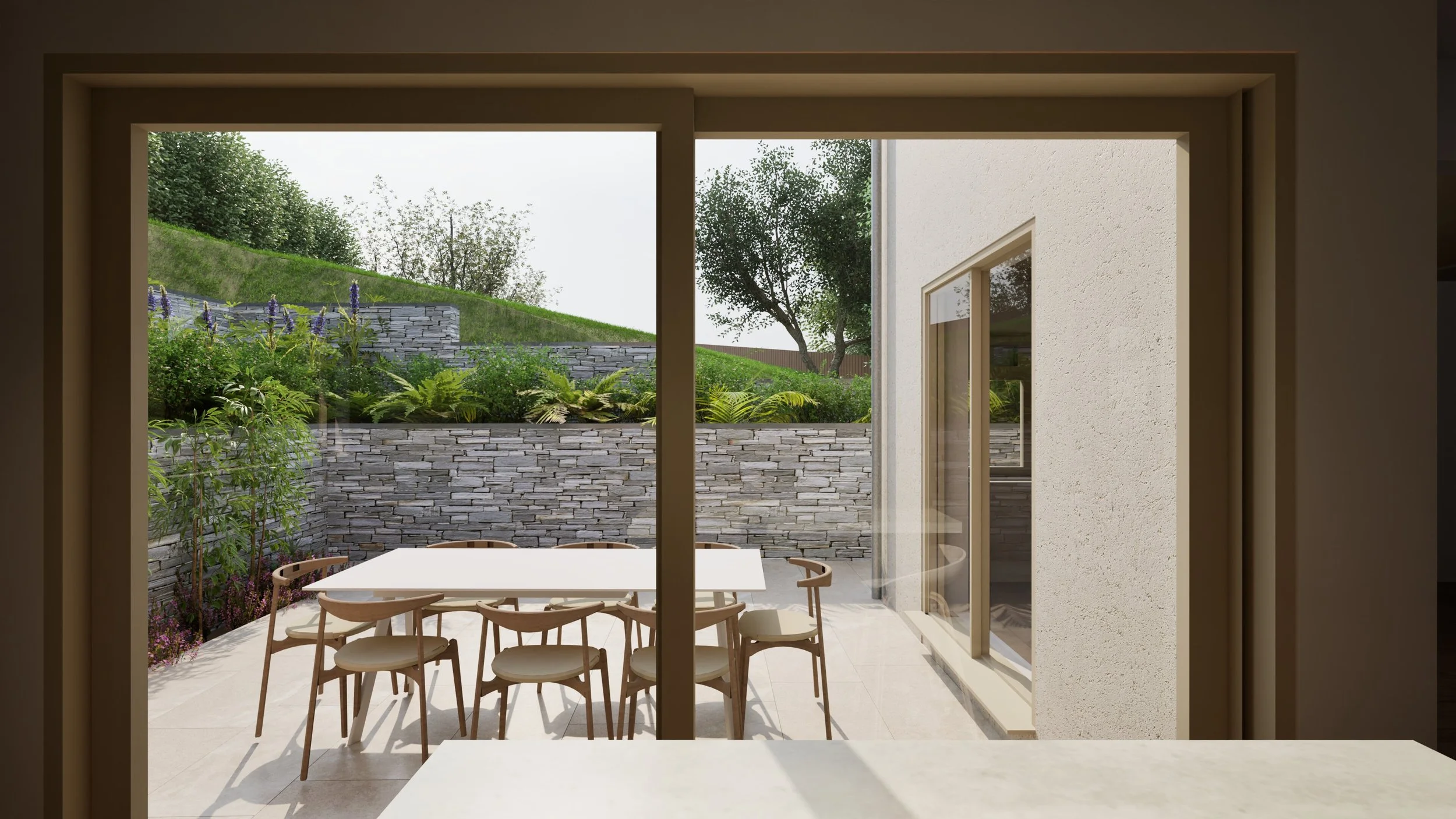
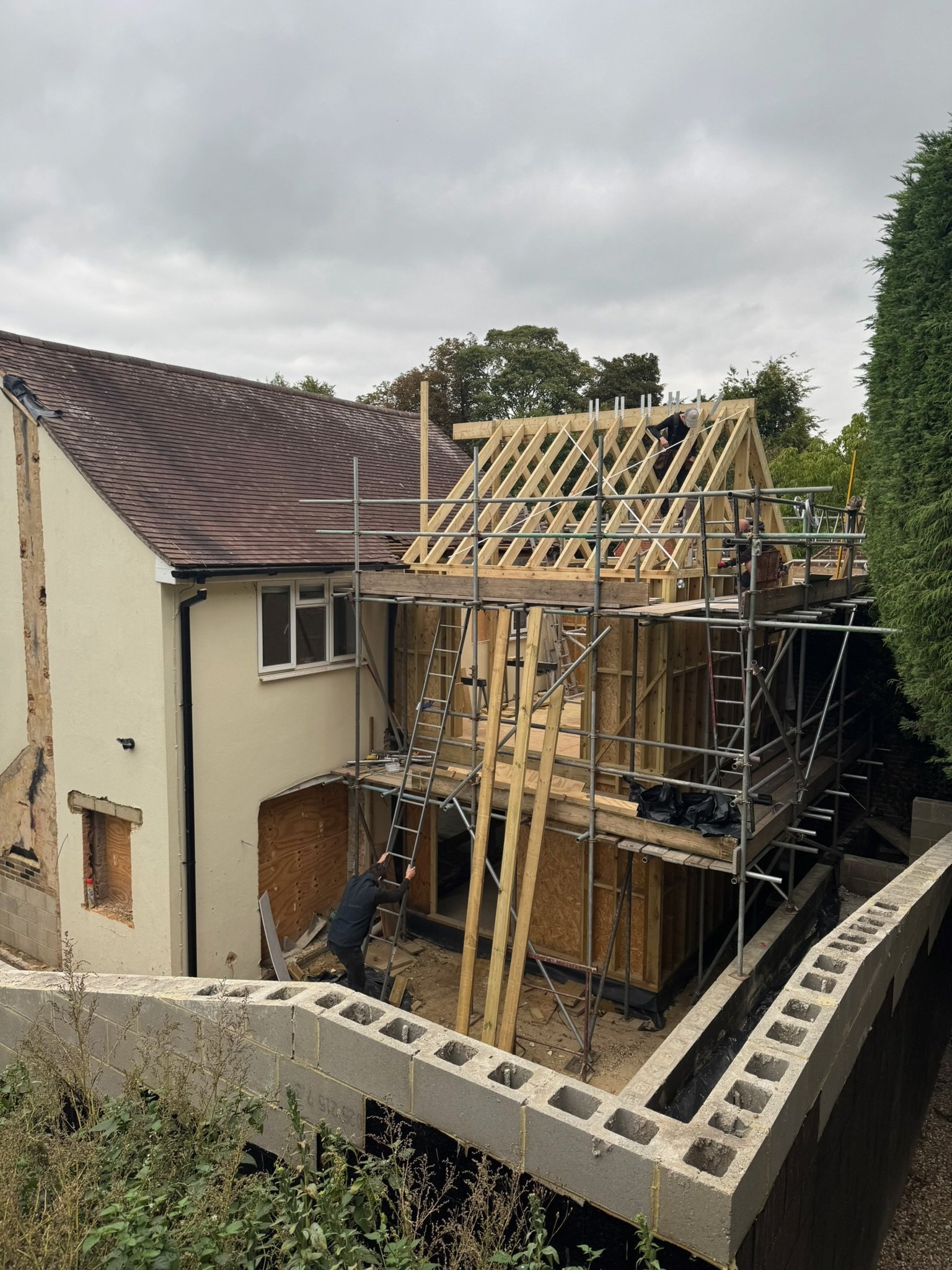
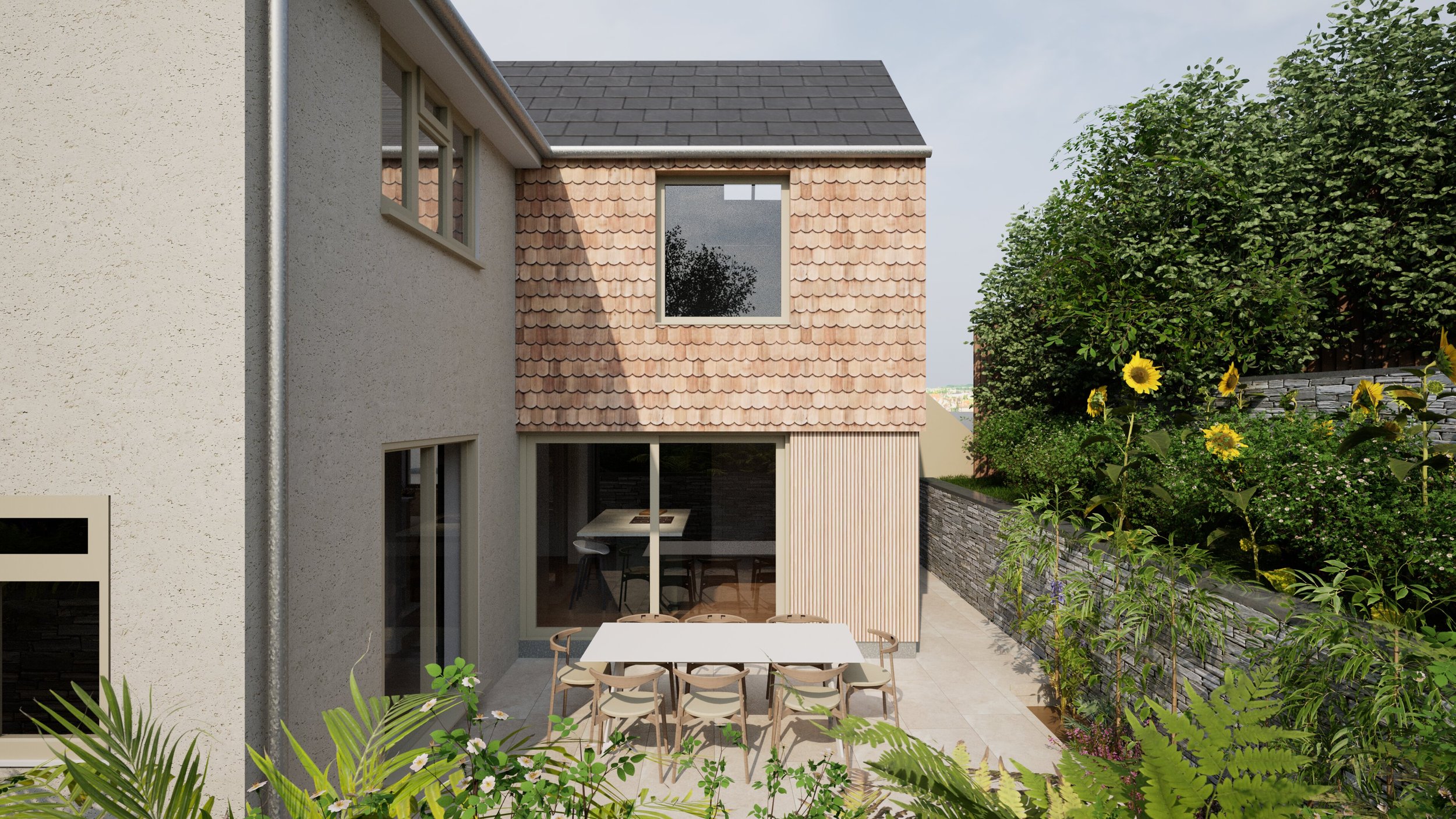
By extending at the rear and carefully excavating into the landscape, we have reoriented the house to open onto a generous new terrace, which improves both the light levels and views. The surrounding garden has been reshaped into cascading levels, softening the previously steep terrain. Internally, the new kitchen now connects directly to the terrace, creating a practical and inviting outdoor living space.
The two-storey extension is constructed using a timber frame, with all openings sized to eliminate the need for any steelwork. Exposed sweet chestnut glulam joists celebrate the natural material palette and clearly express the design intent.
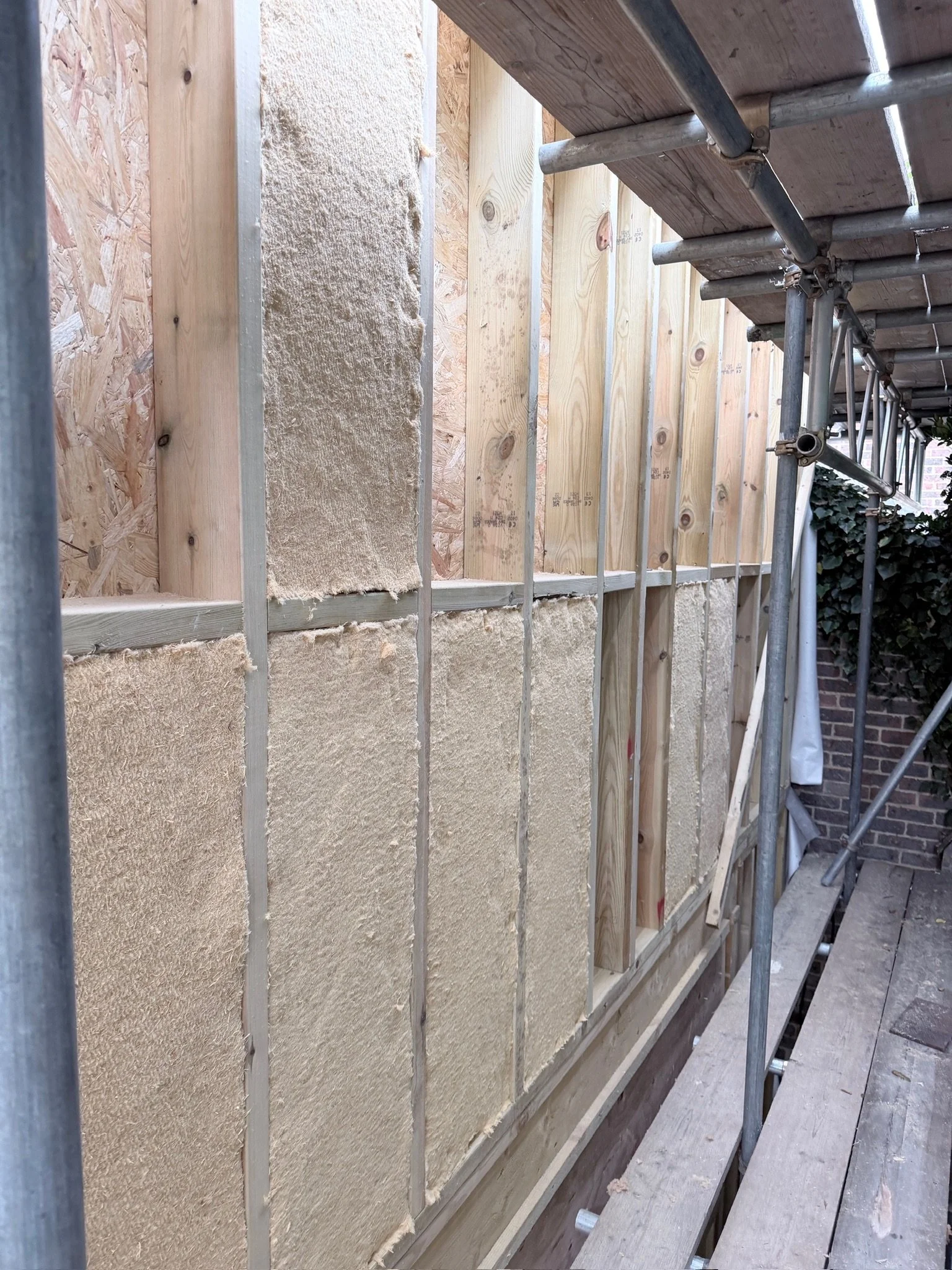
Both the extension and the existing house have been insulated with clean wood-fibre insulation. The extension is clad in British-grown cedar, while the original house has been over-clad with a breathable lime render. Together, these elements blend traditional construction techniques and natural materials with contemporary detailing, resulting in a sustainable, cohesive, and characterful transformation.
The house will be significantly improved through better light, stronger connections to the garden, and a more usable layout. A new rear extension and terrace reorient the home towards the landscape, creating brighter interiors, improved views, and practical indoor–outdoor living. The reshaped garden provides gentler, layered levels that make the outdoor space more accessible and inviting. A timber-frame structure with exposed glulam joists and natural materials adds warmth and character, while upgraded insulation and breathable finishes improve comfort and sustainability. Together, these changes create a more functional, cohesive, and enjoyable home.